
“The habit of writing for my eye is good practice. It loosens the ligaments.”
― Virginia Woolf
Hello my lovelies,
I absolutely adore Woolf’s words. I really fervently believe journals loosen the ligaments of the mind and brain, maybe even our essence of self. The variety in which we have learned to write is forever expanding, so it only feels right, or preferable to many, that we write to our heart and mind’s content.
Personally, I have kept a diary, or journal, since young. I haven’t always been consistent, I’d get sick of the notebook, or the rigorous templates I conceived. I felt at times like I had to do it, I tried to be efficient to make the most of my time. Sound familiar with my spirituality? I didn’t truly understand the essence of what journalling was and is, and how it could help me.
It was a New Year’s goal this year to consistently journal each day, I have kept both generic and Spirit journalling up every day since NY. I feel it is a blessing because it is in writing and journalling, I find a power no person can take from me.
I was lucky enough to have my education the way I did, I have always held adoration for literature, for the power a simple enough word could contain so much. Like desire, love, hope, belief, sadness, malaise, struggle.
How it benefits me
When I was a young child I thought it was nice to just write about my day, I didn’t take it too seriously I just thought I was using pretty stationery. When I went to my first ever psychiatrist at 6 years old I wrote out all my experiences and I felt better taking them in: I was prepared. Another big word.
When I started a journal as a teenager, I got upset at my previous entries so sought to make a system well into adulthood. I would take inspiration from bullet journalling by having a key and essentially writing notes because I felt like I had to. It wasn’t because I wanted to. When I began therapy, it was helpful to journal my experiences and use it as a tool of reflection. This was what really sparked my interest again. I tried bullet journalling, which is fantastic for many things, but that was not for me. I have tried pretty spreads.
Now I simply write my day down to help me remember, I reflect when I want to, and my spirit journal allows me to do my shadow work.
In essence, it helps me to make sense of time and space and the present. I can see if I have an early warning sign of a lay-by. I can relish the joys and find peace in the pain. My Spirit Journal is where I record my weekly divination, where I can look deep into myself.
It benefits me greatly. As I said, I have journalled in both every day since NY and I don’t ever foresee me stopping. There is just a miracle in getting everything fresh onto paper and sighing in relief at organised thoughts that were once a chaos. I find that it can help me be mindful, to stay in the present, to provide a sense of rest and relief.
One thing I’d like to say is that there is journal therapy, guided tools to help you find that relief and practice. If you’d like to learn more let me know!
Types of journals
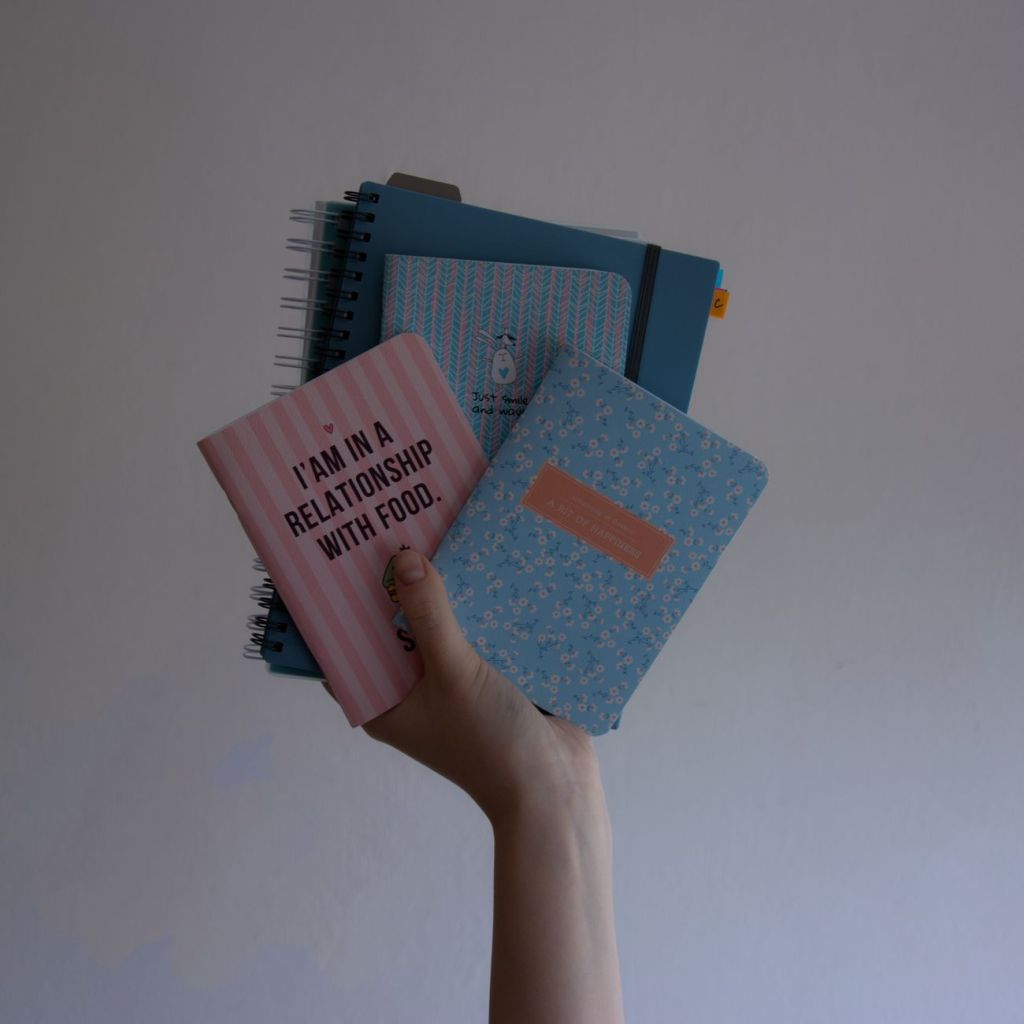
Now, the world of journals is immense for those of all ages and genders, especially in recent years in the self-care and wellness boom. There are guided journals, dated journals, one line a day journals, journals for specific purposes like wellness or budgeting and generally just pretty books to write in. There are also so many pens for different purposes. People like to make works of art with their journals.
It can be overwhelming, I know, I’ve been there. At one point I had about 4 journals on the go, it got too much. I had a ranting one, a daily journal, a gratitude journal, a memory journal, and a planning journal. It was just far too much for me. If this is what you need then go for it! But I ended up last year just needing simplicity, I was trying to track everything. After my breakdown, I redownloaded an old mood tracking app where I now use multiple times a day for tracking activity, mood, goals, sleep and general reflections. I also have a goal based app. But I have two physical journals: one for everyday, and my SJ. I don’t use anything but good old pens and paper.
I used to be a perfectionist and if I made a mistake or two, the whole page had to go, not anymore. I always wanted the same notebook once one was finished but that was expensive. I now have a myriad of books awaiting to be written in. I really should stop buying them.
If you’re starting out, if you’re unsure of what is best, I’d say:
- Purchase a simple notebook you like the look of
- If you like, buy a nice simple pen
- Write
- Explore different styles of writing like gratitude lists
- Write more
- Write even more
It’s a beautiful thing, and taking the time to do it means you can really learn more about yourself. It is a gift to yourself.
Utilising the brain
By actively using a journal, you’re activating all manners of the brain. You’re engaging your memory, your language, your emotions. It’s a lot. These kinds of activities can help you to find a flow state where you can lose time from focus and find yourself feeling lighter. You can use prompts, or lists, it can be an everything book! It is entirely up to you. Some people love a good morning journal session, others prefer to reflect on a night. I’m pretty flexible for evenings, but on a morning is a must. I journal extra if I have something irritating or worrying me and that is any time of day. Prompts are a great way to start to learn more about how journal sessions suit you. For me, I always love a good prompt if I’m stuck on what to write about. But loosening my mind means I can do other things, I release some energy.
Journal prompt: Is there anything that I can do to journal more? Is there a need for it in my life?
Kindly, Leanne x
P.S. The apps I use are Daylio and Finch







Leave a Reply